
Why grain is one of the hardest packaging jobs
Grain buyers judge packaging on what it prevents, not what it looks like. A rice bag that gains a few percent moisture on a six-week sea voyage arrives mouldy. A wheat bag with a seam that opens under 25 kg of stack pressure arrives empty. And a bag that is perfectly sealed but cannot breathe traps condensation against the grain it is protecting.
That tension — between keeping external moisture and insects out and letting internal moisture escape — is what makes rice, paddy, corn, wheat and soybean packaging different from ordinary food packaging.
This guide covers how to spec it, crop by crop.
Start with the crop, not the bag
Rice and paddy
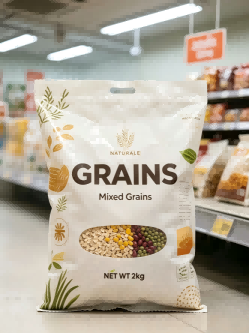
Rice is usually packed at low moisture and is highly sensitive to re-absorption. Paddy (unhusked rice) has a husk that offers some natural protection, but it still needs to be kept dry to avoid cracking during milling.
Two practical consequences:
- Paddy generally travels in larger-format woven sacks and is more forgiving on appearance, because milling removes the outer layer.
- Milled rice is normally the retail-facing product, so it takes the laminated and printed constructions — this is where printing quality and barrier performance both matter.
If you pack both, do not assume the same structure works for each. Paddy in a heavy plain woven sack is normal; milled rice in the same sack usually is not.
Corn / maize
Maize is abrasive. Dry kernels have sharp edges that work away at film and seams during transport, which is why puncture resistance matters more here than in most grain applications.
Maize also splits into two very different packaging markets:
- Bulk feed maize — plain heavy woven sacks, cost-driven.
- Retail maize products — flour, grits, snacks — printed flexible packaging, appearance-driven.
Wheat
Wheat is dense and stacks heavily. A pallet of wheat bags puts sustained compression on the bottom layer, so seam strength and bag dimensions matter as much as film barrier. Oversized bags that look generous at filling time are the ones that fail in the stack.
Soybean / soya bean
Soybean carries oil. That changes the failure mode: instead of only moisture, you are managing oxidation and rancidity, especially in crushed or flaked products. Higher oil content rewards a better oxygen barrier, and for retail formats it usually means a structure with a metallized layer rather than a plain clear film. Our mylar bag thickness guide explains how that barrier is chosen without simply adding gauge.
Barrier vs breathability: the decision that comes first
Most grain packaging failures trace back to getting this one call wrong.
| Requirement | What it means in practice |
|---|---|
| Breathable | Woven construction, or perforated film. Allows internal moisture to escape, reducing condensation during temperature swings in transit. |
| Barrier | Laminated or film structure with a metallized or foil layer. Keeps external humidity and odours out and slows oxidation. |
The common mistake is choosing barrier everywhere because it sounds safer. If grain goes in warm and the container cools at sea, sealed barrier packaging can hold that moisture inside against the product.
The usual resolution is a compromise structure — a woven or heavier base with a laminated face for print and a controlled moisture performance, plus a liner only where the destination climate or voyage length actually requires it.
Which bag format fits which job
Woven PP sacks — bulk
The default for 25 kg and 50 kg grain. Tough, inexpensive, breathable, and stackable. Usually plain or single-colour printed. This is the right answer when the bag's job is transport and the buyer's brand lives on the shipping documents instead.
Laminated woven bags — bulk with a brand
The same woven base with a BOPP or PE lamination on the outside. The lamination carries high-quality print and adds a real moisture barrier, which is why it dominates retail rice. It costs more than plain woven and less than a full film structure.
Flat bottom bags and stand up pouches — retail
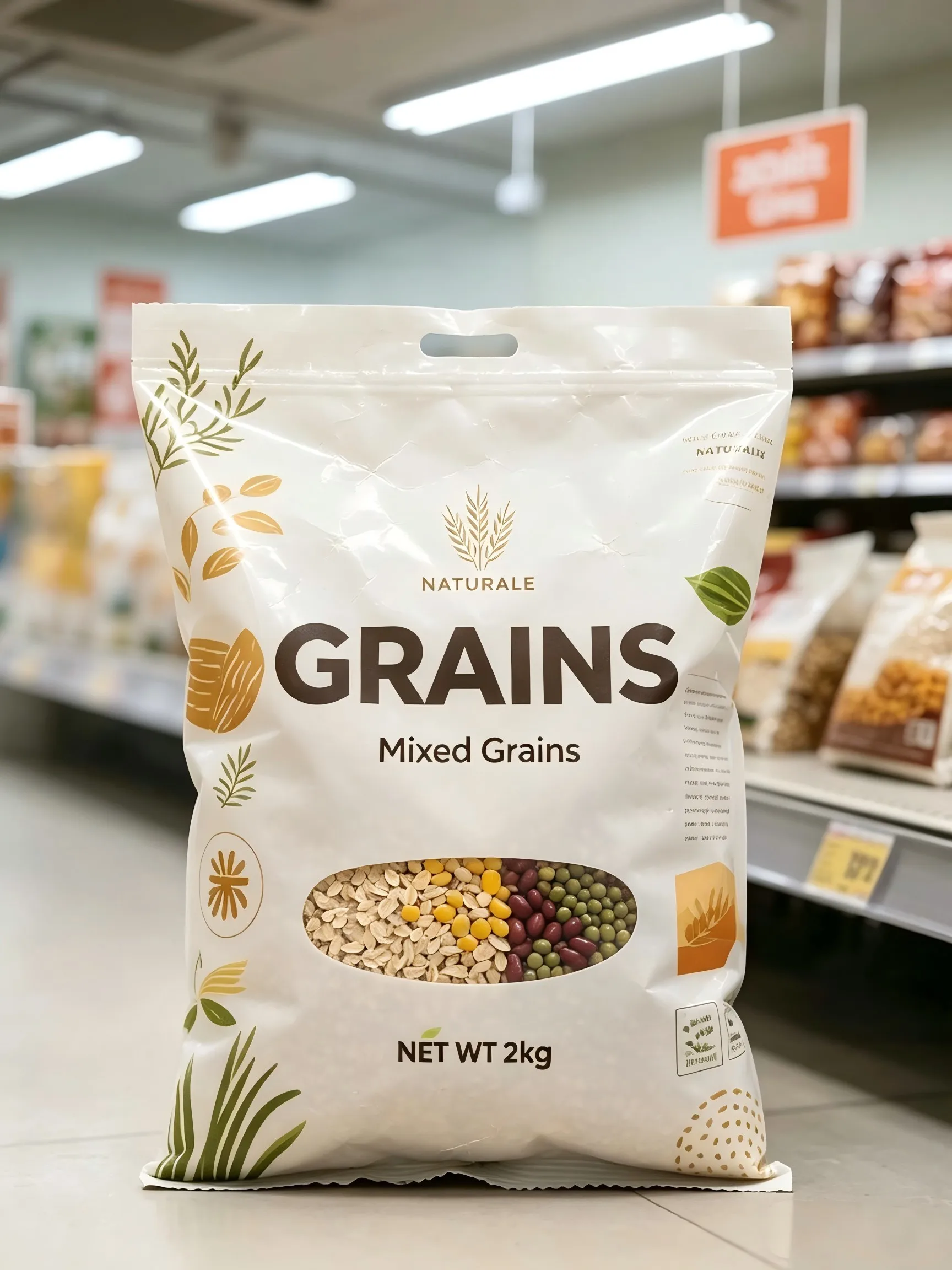
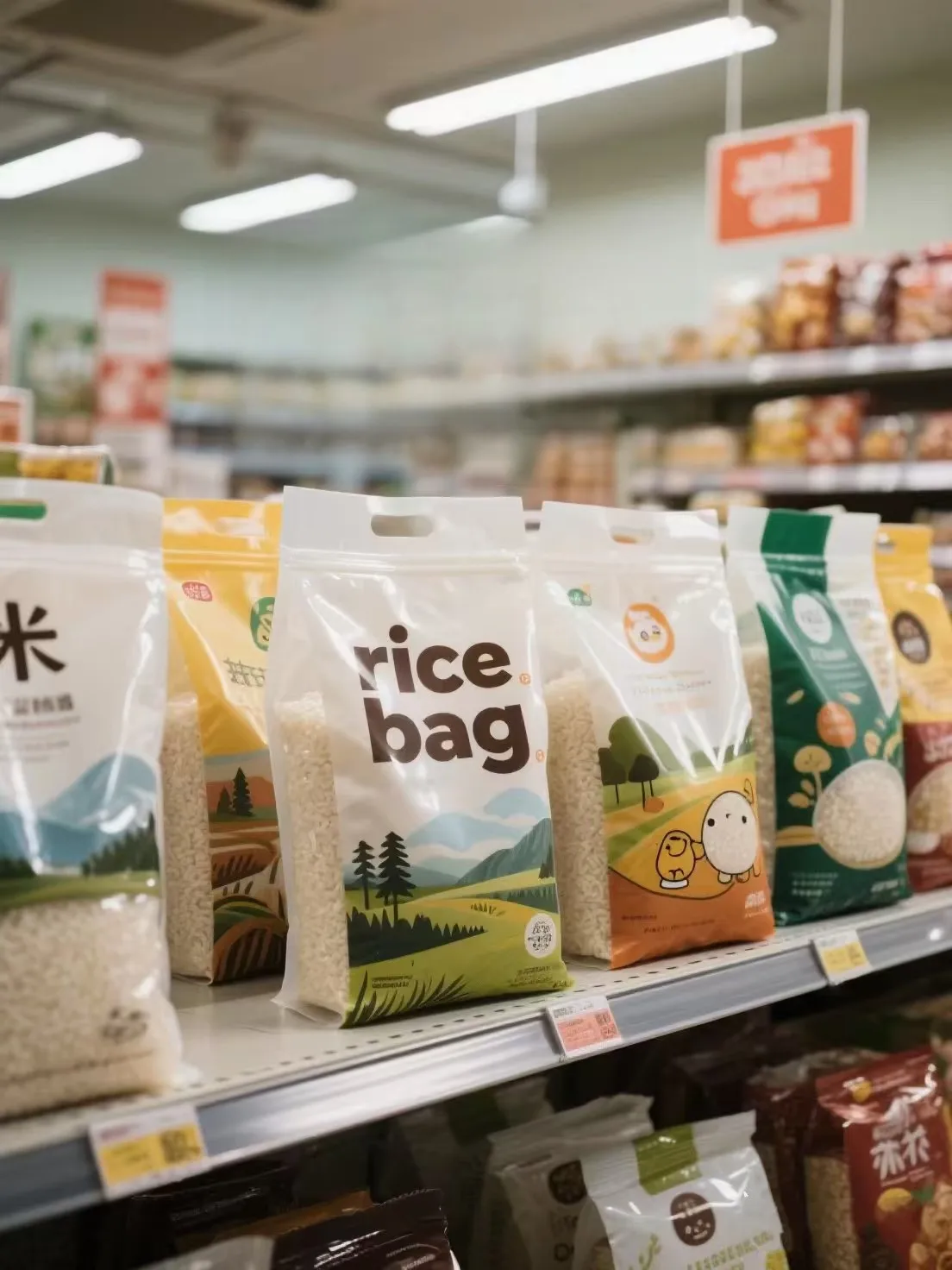
For 1 kg to 5 kg retail grain, coffee-style formats have moved into grain. A flat bottom bag stands unaided on the shelf and gives you a clean front panel for print; a stand up pouch does the same with a smaller footprint. Both support a resealable zipper, which retail buyers increasingly expect.
Flat sachets — sampling and single-serve
Small formats for samples, hotel packs and single-serve grain products. Usually the cheapest per unit, and the format where food-grade film selection has the biggest effect on real shelf life.
Fill weight and format: a starting point
| Fill weight | Typical format | What to watch |
|---|---|---|
| 500 g – 1 kg | Stand up pouch / small flat bottom bag | Print quality, resealable zipper, oxygen barrier |
| 2 – 5 kg | Flat bottom bag / laminated woven bag | Seam strength, handle or die-cut carry feature |
| 10 – 25 kg | Laminated woven sack | Lamination coverage, stitched or folded-and-glued closure |
| 25 – 50 kg | Heavy woven sack, optionally laminated | Compression strength, stacking height, liner if specified |
Bag dimensions are set by product density, not weight alone — 25 kg of paddy occupies more volume than 25 kg of wheat. Always fill a sample with the real product before committing to a print run.
Five questions to settle before you print
- What moisture content does the grain go in at? This determines whether you need breathability at all.
- How long is the voyage, and through what climate? A two-week domestic run and a six-week sea freight leg are different specifications.
- What is the stacking plan? Height and duration drive seam and film strength more than the fill weight does.
- Which layer carries the print? Laminate or direct print — the answer changes both cost and barrier.
- Is the bag reused? If a buyer re-sews and refills, closure type matters more than the film.
Frequently asked questions
What is the difference between a rice bag and a paddy bag?
A paddy bag carries unhusked rice, which is normally milled before sale, so appearance and print quality matter less. A rice bag carries milled rice, is usually retail-facing, and therefore takes laminated or film constructions with proper print and barrier.
Can one grain bag work for corn, wheat and soybean?
Mechanically, often yes. Practically, you should test with the real product. Maize is more abrasive, wheat is denser and stacks harder, and soybean's oil content raises oxidation risk — three different failure modes against the same bag.
Do grain bags need to be breathable?
Not always. Breathability matters when grain goes in warm or when transit involves large temperature swings. Where the destination is dry and the voyage short, a barrier structure is the better choice. The specification should follow the journey.
What minimum order do you apply?
One piece. We produce from a single unit with a seven-day production window and DDP shipping, so you can fill a real bag with your real product before placing a volume order. See our full product range or send us your specification for a quote.
---